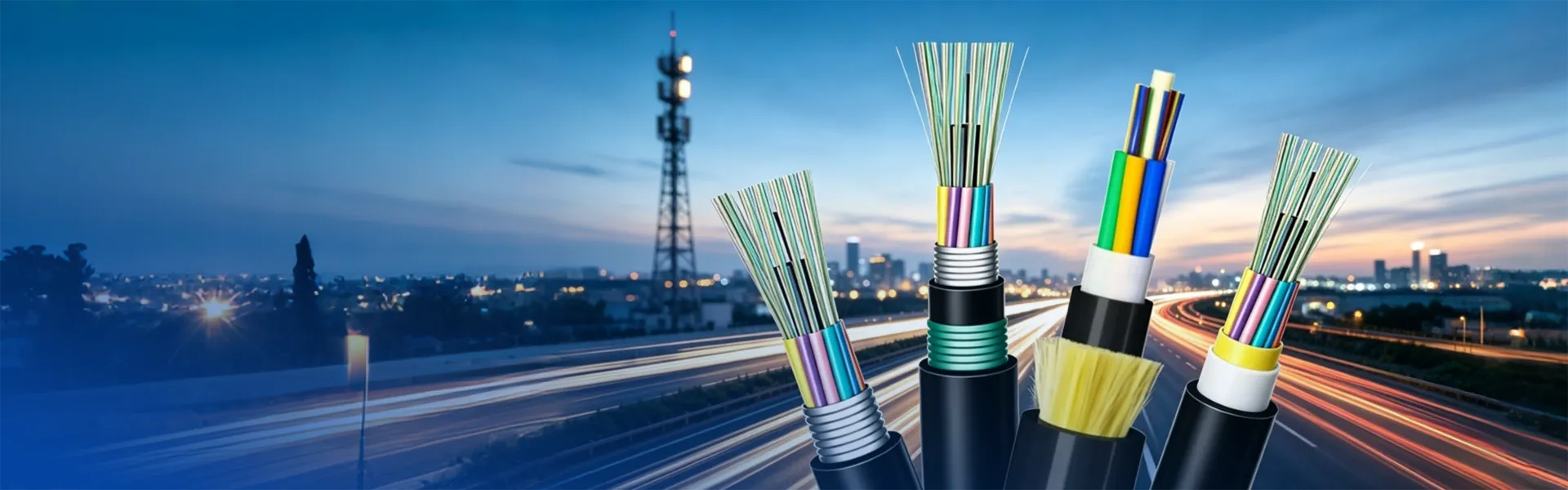
Outdoor fiber optic cables must survive UV, moisture, temperature cycling and mechanical load for 25 years or more. Huifiber manufactures the full outdoor range — aerial, duct and direct burial — and recommends the construction after reviewing your route.
It depends on the route. Aerial routes usually take ADSS or figure-8 cable, duct routes take GYTA/GYTS loose-tube cable, and direct burial needs an armored construction such as GYTA53 or GYTS53. Tell us the route type, span and environment and we will specify the correct cable.
Armored cable (corrugated steel or aluminium tape) is the right choice for direct burial and for areas with rodent risk, because the metallic tape blocks moisture and bites. Non-armored all-dielectric designs such as ADSS are preferred for aerial installation near power lines, since they carry no conductive path and are immune to lightning and induced voltage.
Yes. Our loose-tube outdoor cables are produced in fiber counts from 2 up to 288 cores, and higher counts are available on request. Fiber count changes the cable diameter, weight and maximum drum length, so we confirm these together with the datasheet before shipment.
Standard outdoor loose-tube cable is rated for -40 °C to +70 °C in operation. Installation normally assumes 0 °C to +50 °C because the jacket is stiffer when cold. If your project runs in extreme cold or desert heat, tell us and we will select a matching jacket compound.
Our outdoor cables are designed and tested against the IEC 60794 series for cables and IEC 60793 for the optical fibers, with RoHS-compliant PE, HDPE or LSZH jackets. Test reports are supplied with each production lot on request.
We are a manufacturer. Huifiber operates its own plant in Dongguan, Guangdong, China, runs management systems built to ISO 9001:2015, and has been producing fiber optic cable since 2019 for more than 500 customers in over 50 countries.
Still have a question? Send us your specification and our engineers will reply with a recommendation and a quotation.